

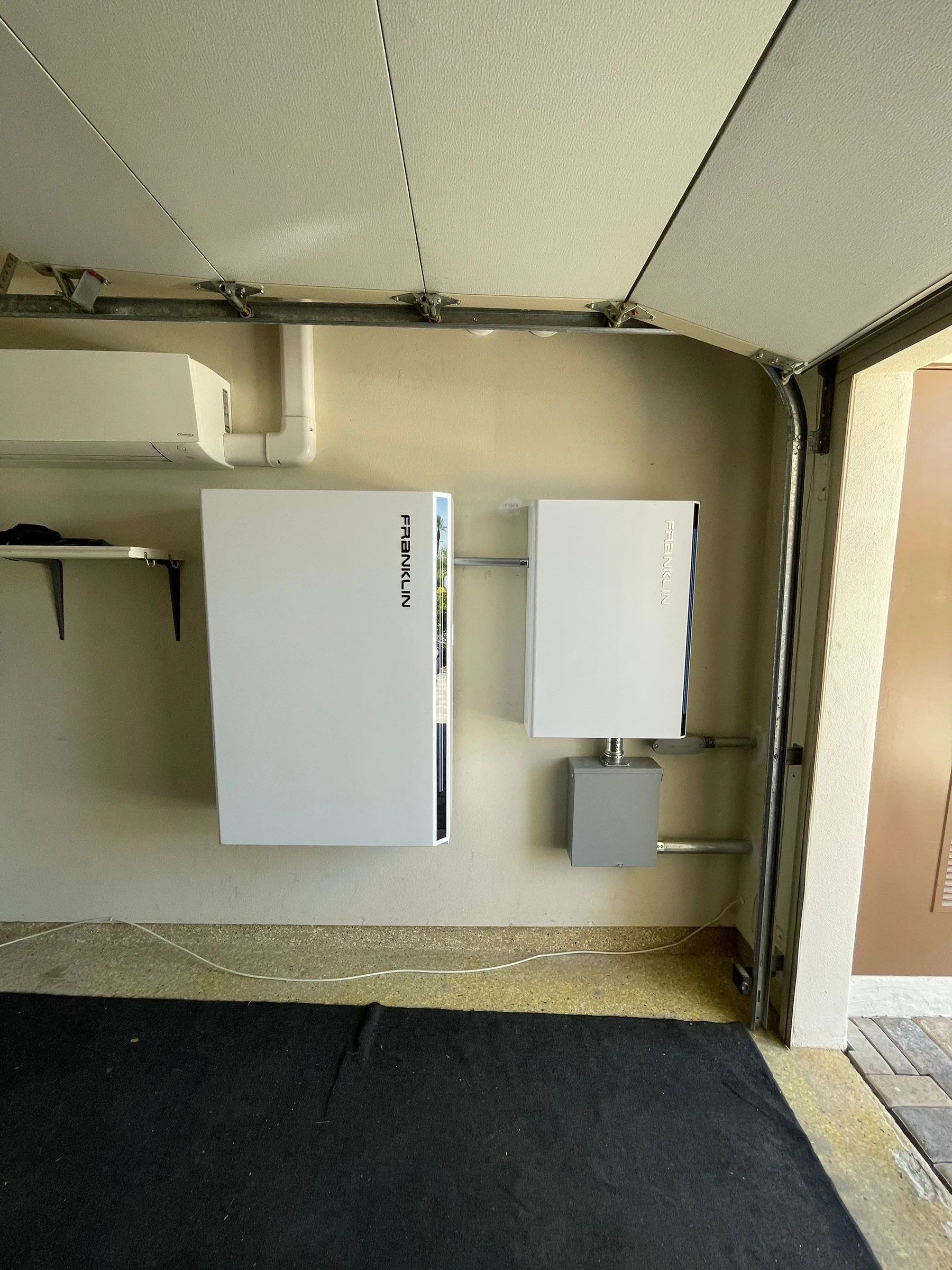
New residential battery storage
Battery Only Installations
New battery storage sized around backup needs, daily use, and the property electrical system.
- Best fit
- adding storage for the first time
- Service area
- Coachella Valley and surrounding desert communities
Direct answer
What is a Battery-First Mycrogrid®?
A Battery-First Mycrogrid® adds a new energy-storage system without requiring new solar panels as part of the same project. The battery is designed around the property's electrical system, existing solar if present, backup priorities, available space, and operating goals.
Service overview
Storage designed around the loads that matter.
A battery installation is more than mounting equipment on a wall. We identify which circuits or property loads need support, determine how the battery can charge, evaluate the electrical service, and confirm where the battery, controller, disconnects, and related equipment can be installed safely.
If solar already exists, we review its inverter and interconnection before proposing a battery architecture. If the property does not have solar, we explain the supported charging and backup modes for the selected equipment so the owner understands what the system can and cannot do.
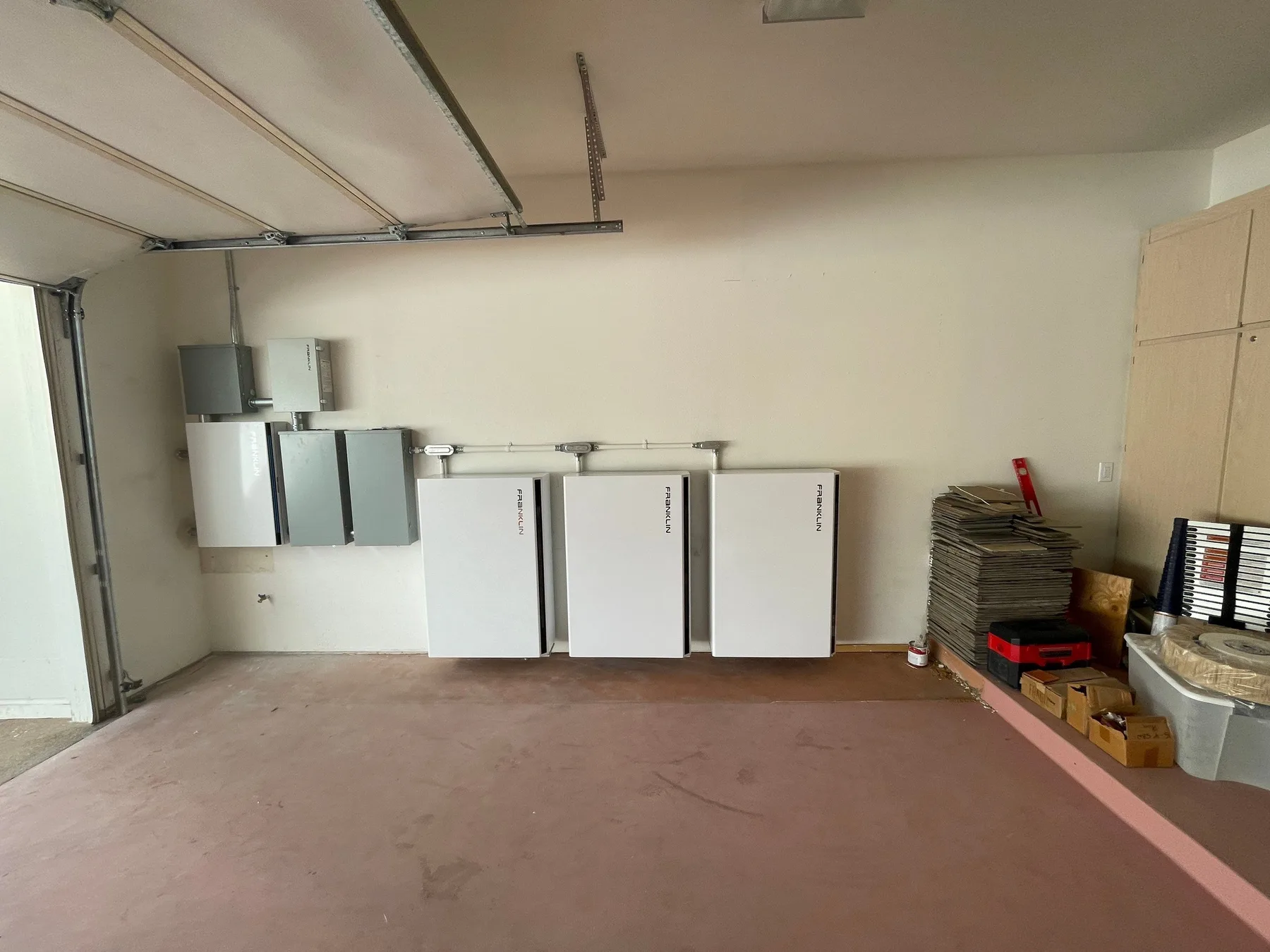
View this installation in the galleryWhat this service can include
- Essential-load review
- Battery and equipment layout
- Electrical and transfer equipment
- Permitting and installation
- System testing and owner orientation
Final equipment and scope are confirmed after property, compatibility, and code review.
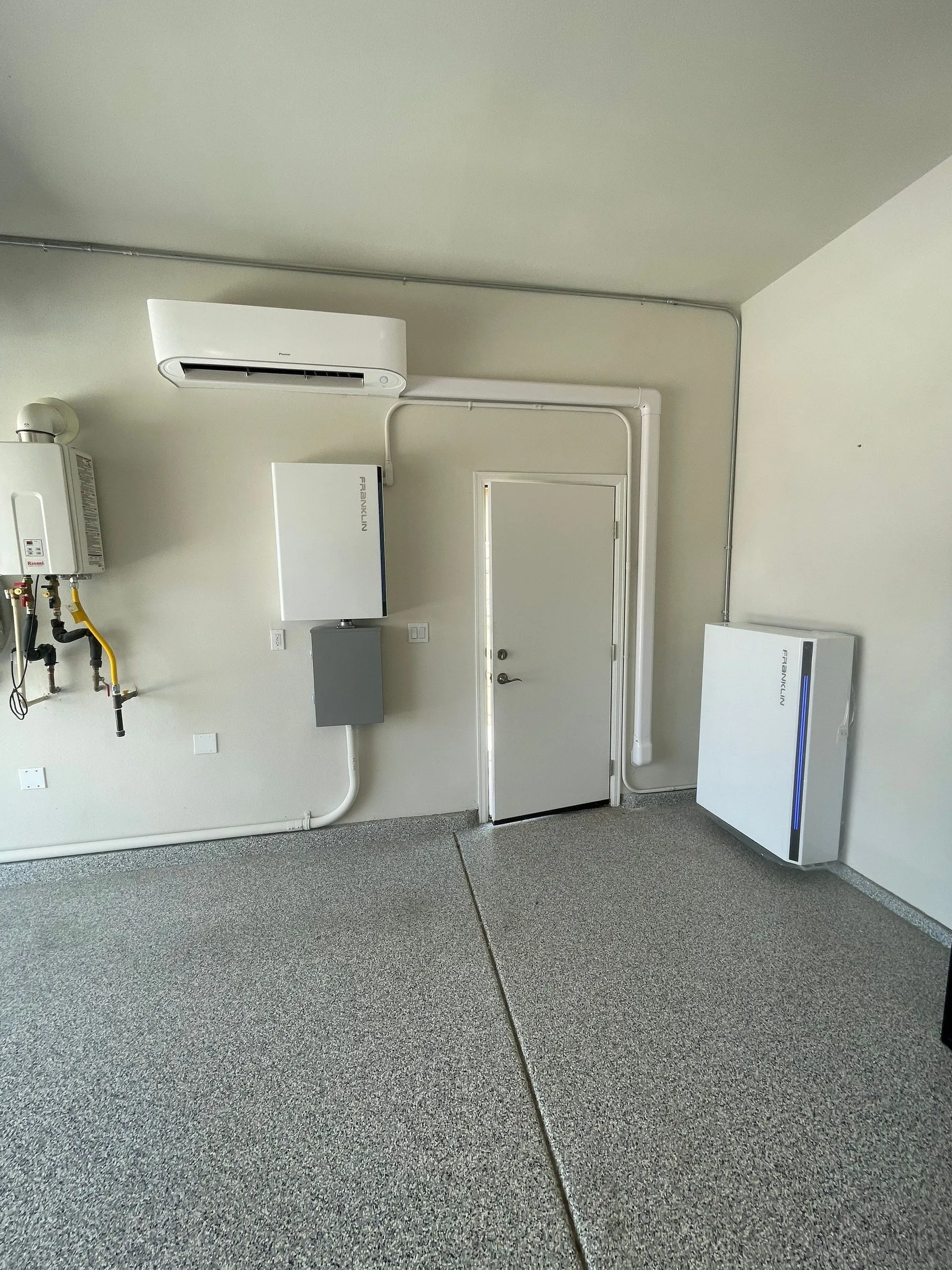
Battery design priorities
Backup built around the loads that matter.
-
Backup with a defined purpose
Battery capacity follows documented essential loads and outage priorities rather than a generic package size.
-
Compatible electrical integration
Service equipment, panels, transfer hardware, and existing solar are reviewed before the final design.
-
Clear equipment placement
Access, working clearances, environmental exposure, code requirements, and conduit routes shape the layout.
-
Tested operating modes
Charging, backup, transfer behavior, controls, and owner access are checked during commissioning.
Design inputs
What we evaluate before equipment is selected.
- Circuits and loads that need backup power
- Desired backup duration and everyday battery use
- Existing solar inverter and interconnection compatibility
- Main service, subpanels, and available electrical capacity
- Indoor or outdoor equipment space and required clearances
- Utility, permitting, fire-safety, and manufacturer requirements
Project path
From essential-load review to testing and orientation.

-
Essential-load review
We identify the appliances, circuits, and systems the owner wants available during an outage and document their expected demand.
-
Battery and electrical design
Capacity, power output, transfer equipment, panels, conduit routes, equipment locations, and compatibility are developed into the installation scope.
-
Permitting and installation
The project moves through the required approvals, equipment coordination, mounting, wiring, labeling, and electrical connections.
-
Testing and orientation
We test transfer and backup behavior, configure supported operating modes, and show the owner how to view and operate the system.
Questions homeowners ask
Answers about Battery Only Installations.

Can a home battery be installed without solar panels?
Yes, some battery systems can be installed without adding solar in the same project. Charging options, backup behavior, utility rules, and economic results depend on the selected equipment and local rate structure, so those details are confirmed during design.
Can a battery be added to an existing solar system?
Often, but compatibility must be verified. We review the existing inverter, electrical configuration, interconnection, monitoring, warranties, and available equipment space before recommending an AC-coupled or other supported design.
How long will a home battery provide backup power?
Backup time depends on usable battery capacity and the loads operating during the outage. Air conditioning, electric heating, pool equipment, EV charging, and other high-demand loads can shorten runtime considerably.
Can one battery back up the entire home?
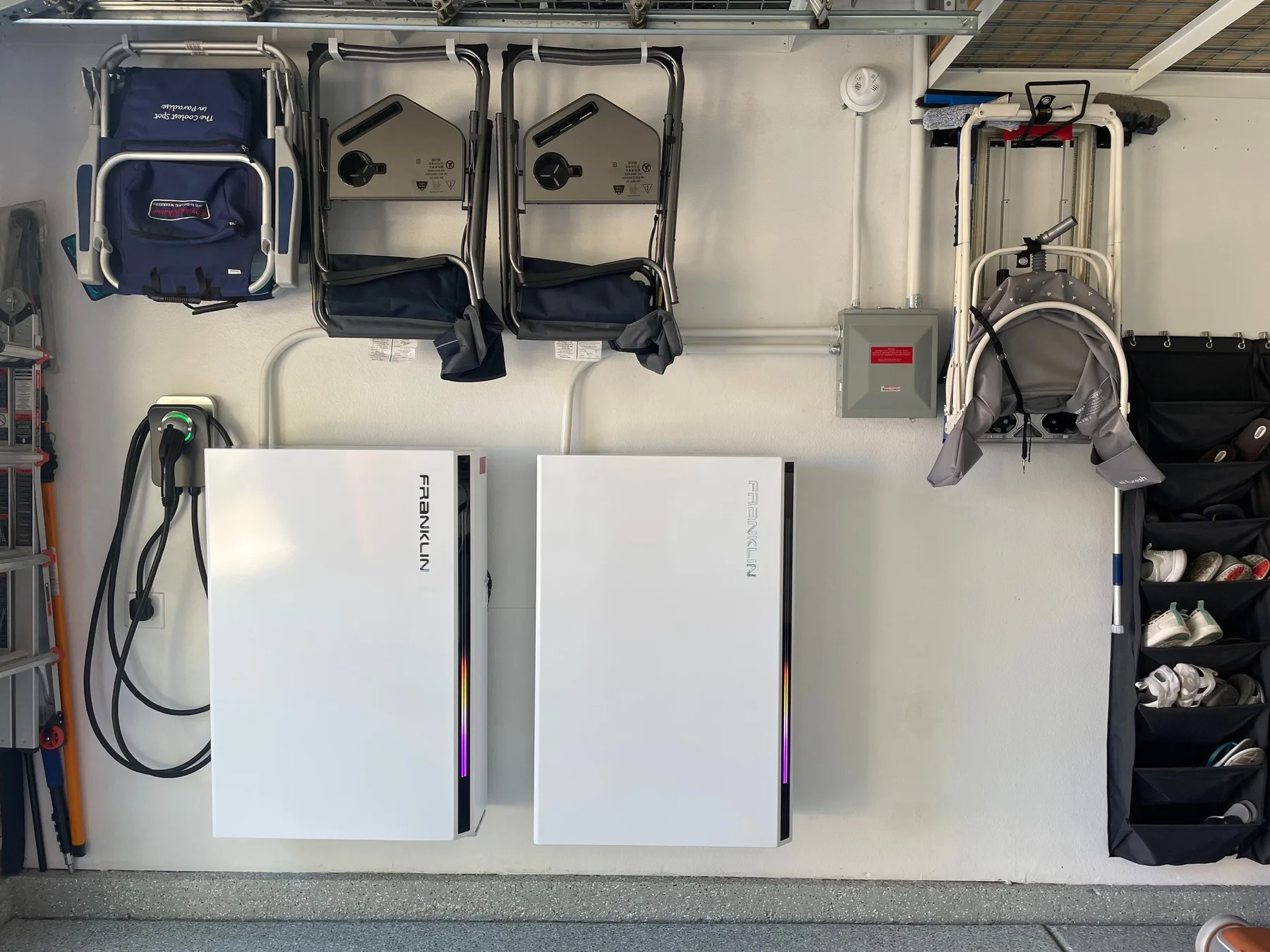
That depends on the battery's power rating, the home's peak demand, motor-starting requirements, the electrical design, and owner expectations. Some homes need load management, selected circuits, or multiple battery units.
How do you choose between FranklinWH and Lunar Energy?
We compare supported power, usable capacity, modular expansion, controls, existing-system compatibility, installation clearances, warranty terms, and the property's operating goals before recommending equipment.
Next step
Define what the battery needs to carry.
A useful battery plan starts with loads, runtime expectations, and the existing electrical system. We will turn those inputs into a clear installation scope.