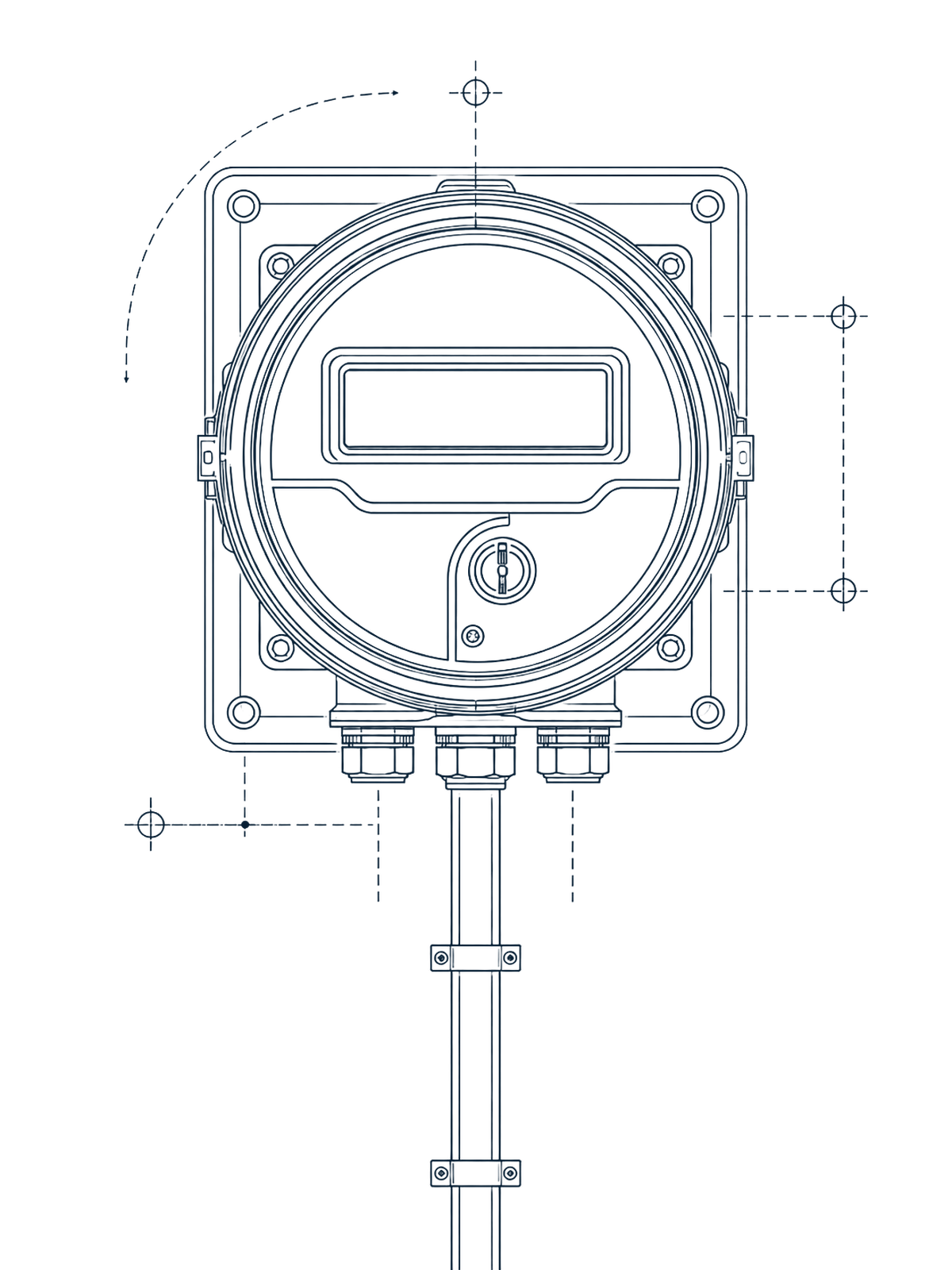
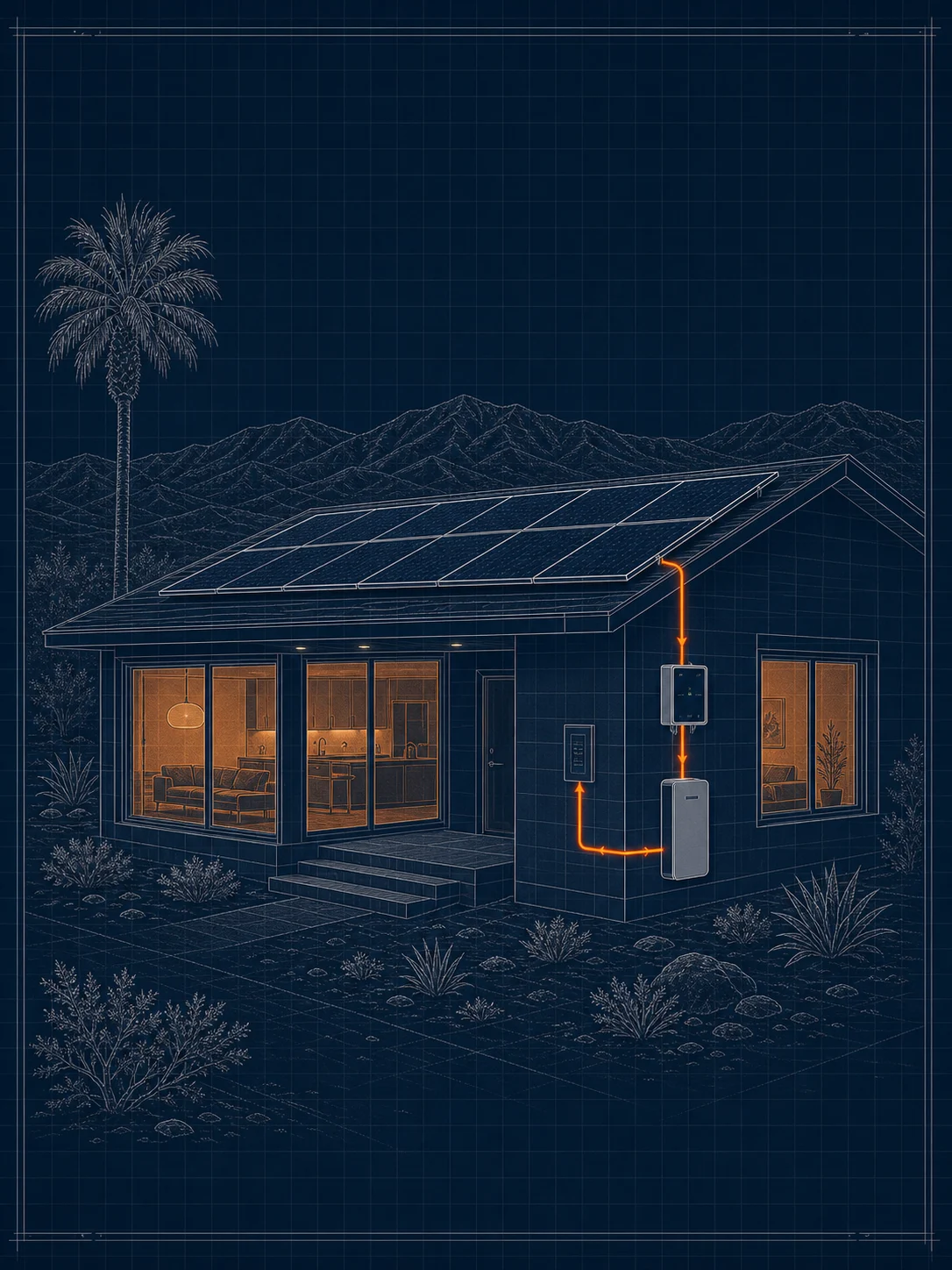
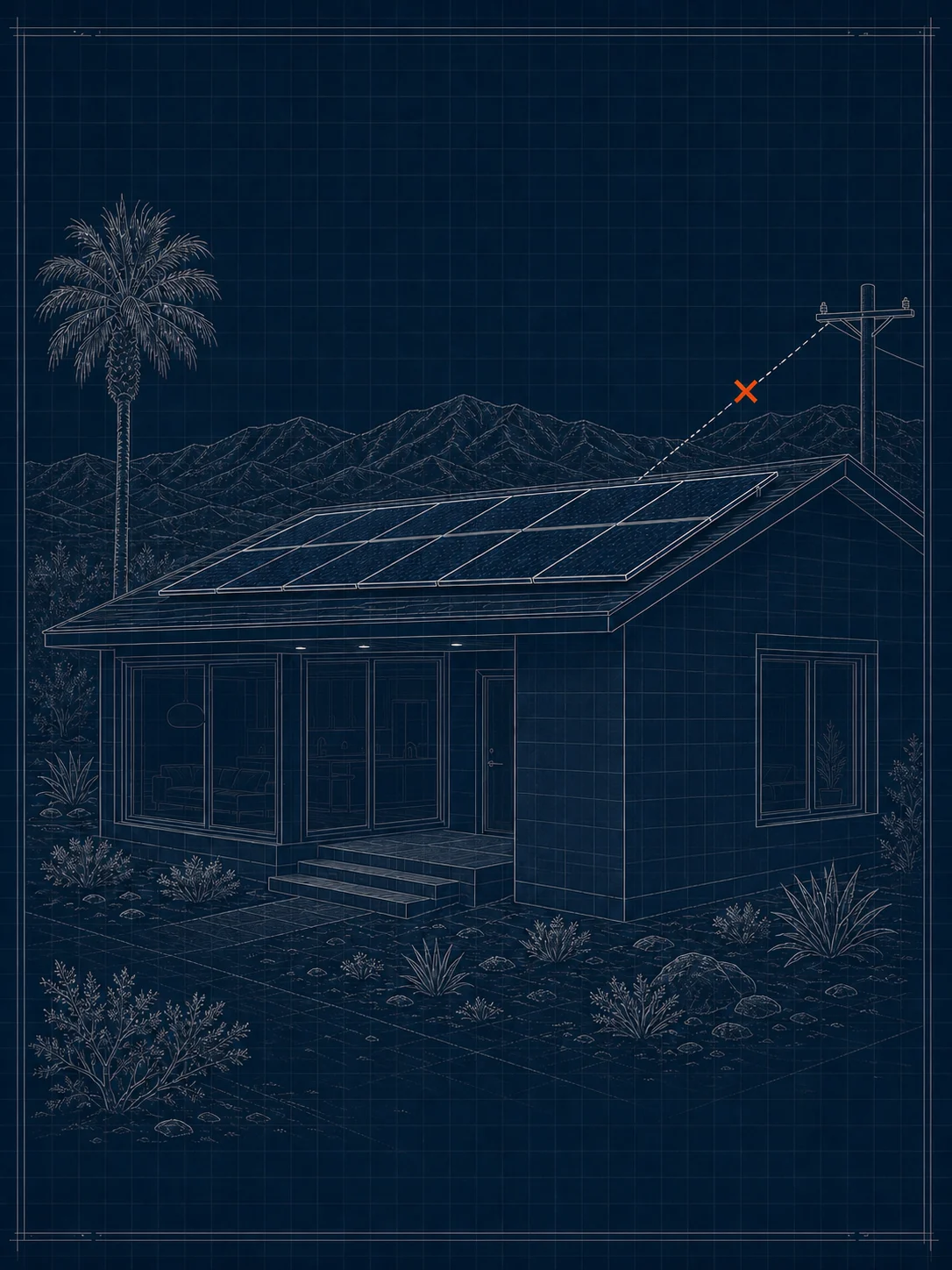
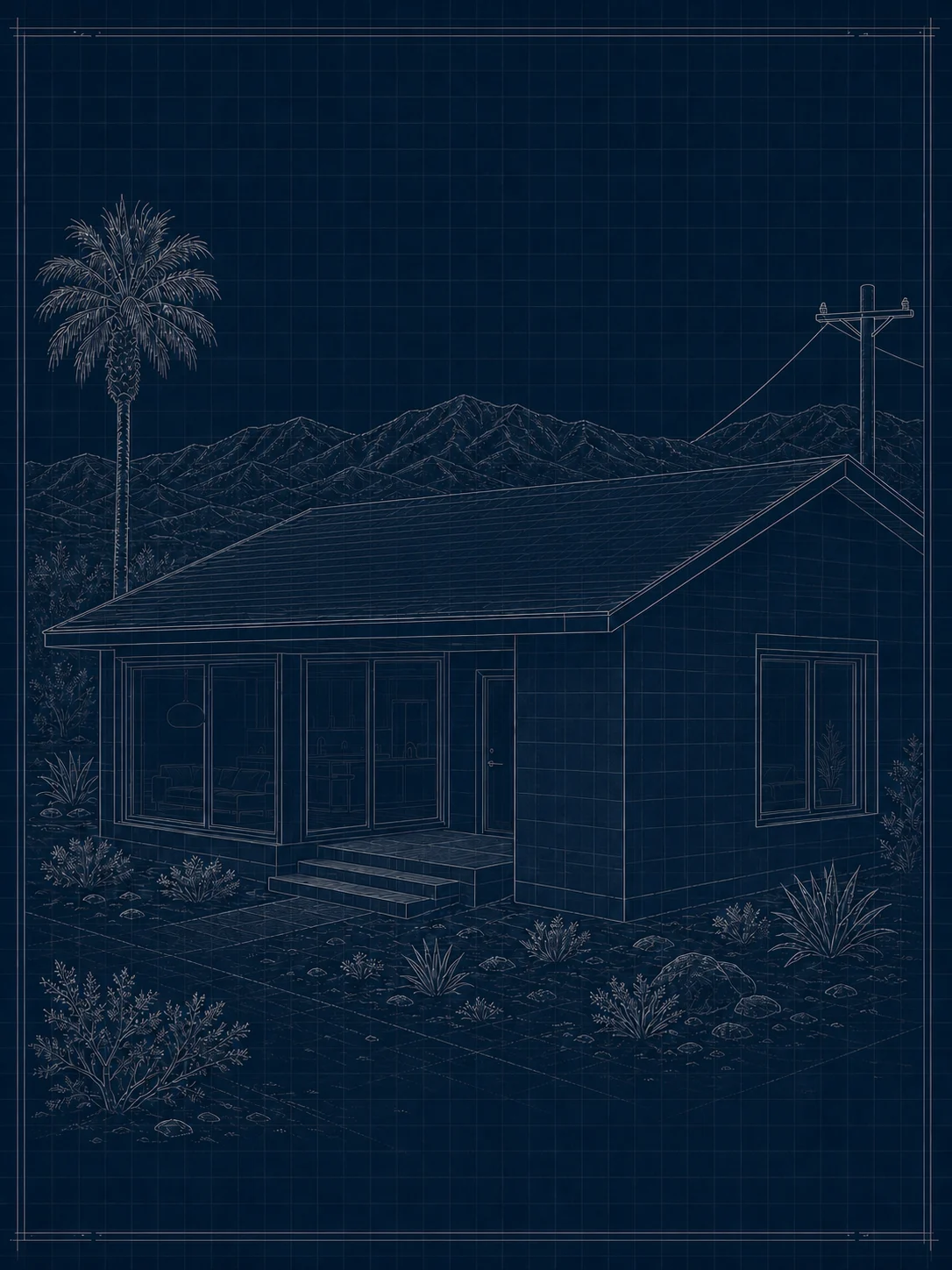
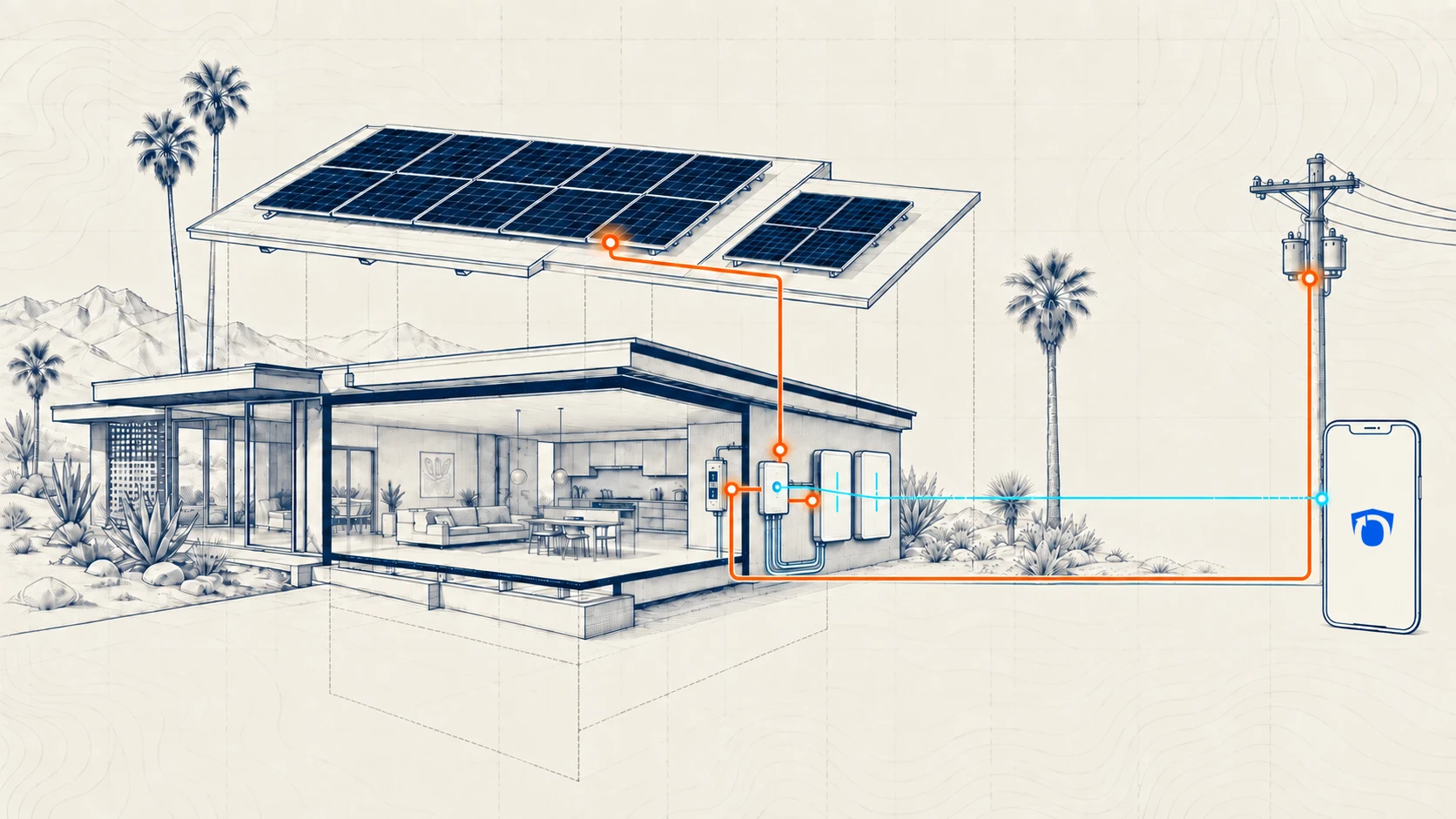
Blueprint of a desert home connected to solar panels, battery storage, local controls, and the utility grid

Comparison

Three ways to power your home. Only one is built for independence.

Every home uses electricity. The difference is who controls it. Compare a traditional utility-dependent home, a solar-only system, and a complete Mycrogrid® designed to produce, store, and control your own energy.

The net-metering trap

Why the old solar deal broke.

For 20 years, Californians were sold a lie: that solar equals energy independence. Here is how net metering actually worked and why staying utility connected stopped paying off.

The electricity did not change. The credit did.

Same electricity out

Value back

  1. NEM 1.0

    The bait

    Full retail credit

    Full retail credit made solar look like freedom. It was really customer and electron acquisition, a participation agreement in a system you never controlled.

  2. NEM 2.0

    The squeeze

    Retail minus non-bypassable charges

    Smaller credits and time-of-use pricing. They controlled the wires, set the price, and owned the relationship, so they could change the deal at any time.

  3. NEM 3.0

    The reveal

    Avoided-cost export rate

    Export rates gutted overnight; solar owners went from partners to exploited suppliers. That is not evolution. That is the reveal.

Net metering policies and compensation vary by utility and over time. Bar lengths are illustrative, not a rate quote.

Net metering was the mechanism that kept you tied to the grid with just enough incentive to stay dependent. NEM 3 removed the incentive.

Welcome to the microgrid era: no exports, no permission, no dependence. The goal isn't to fight the utility, it's to outgrow it.

The part nobody explains

Why solar and batteries can still go dark.

Here is the test: if your power goes out during a blackout, you are not energy independent, even with panels on the roof and a battery on the wall. The reason is not the hardware. It is the rules.

  1. 01

    It fails because of the rules

    When your system is interconnected with the utility, they still control how you can use it, when it operates, and how your energy flows. Most systems were designed to fit inside a controlled utility framework.

  2. 02

    No exports, no permission

    Mycrogrid® does not export power back to the grid, so there is nothing to ask permission for: no interconnection applications, no utility approvals, no surprise upgrade costs.

  3. 03

    No four-to-six-month wait

    Grid-tied systems wait on Permission to Operate: eight steps and a four-to-six-month wait before you can switch on what you already paid for. Mycrogrid® removes that bottleneck so the utility no longer controls your timeline.

Decision lens

Three approaches to energy independence.

The same home. The same goal. Very different outcomes.

Equipment-focused

Solar-only

The same home with solar panels but no stored energy or local backup during a utility outage.

The traditional purchase: panels on the roof, a lower bill, and not much beyond that.

  • Optimized primarily for solar production rather than complete energy management.
  • May require future redesign as energy goals expand.
  • Often evolves into a more comprehensive energy solution over time.

Traditional

Utility connected

The same home relying completely on utility power with no solar generation, storage, or backup.

Staying entirely with the utility: no project, no equipment, and no protection.

  • Best for homeowners who prefer to continue relying primarily on utility power.
  • Offers the least opportunity to manage or optimize long-term energy costs.
  • Provides today's solution rather than tomorrow's energy platform.

Complete system

Mycrogrid® system

Solar + storage + control
Produce
Store
Control
Mycroguard™
Support
The real disruption isn't solar. It isn't batteries. It's control.

Solar produces electricity. Batteries store it. Mycrogrid® gives you control — deciding when your battery charges, when it powers your home, and when the utility becomes backup instead of the primary source of energy.

Learn how a Mycrogrid® works

What you get

Side by side, line by line.

Solar lowers your bill. A microgrid adds storage, backup, local control, and monitoring.

Feature Mycrogrid® Solar only Utility only
Backup power Yes. Automatic when the grid goes down. Shuts down during outage. No. You lose power when the grid does.
Stored energy Yes. Sized and integrated for your needs. Usually not. Added later, if at all. No. You cannot store utility power.
Monitoring Yes. Real-time system and performance visibility. Limited. Production only. No. You see problems after they happen.
Local control Yes. You control how and when it runs. No. Utility rules still shape the system. No. Zero local control.
Rate exposure Lower and more predictable over time. Bills go down, but rates still control you. Fully exposed to every rate and fee.

A Mycrogrid® is designed around local energy use. Solar, storage, controls, and monitoring work together to keep more of your energy available at home.

Mycrogrid® changes the conversation.

The future of residential energy isn't about adding more panels. It's about producing, storing, monitoring, and controlling the energy your home already generates.

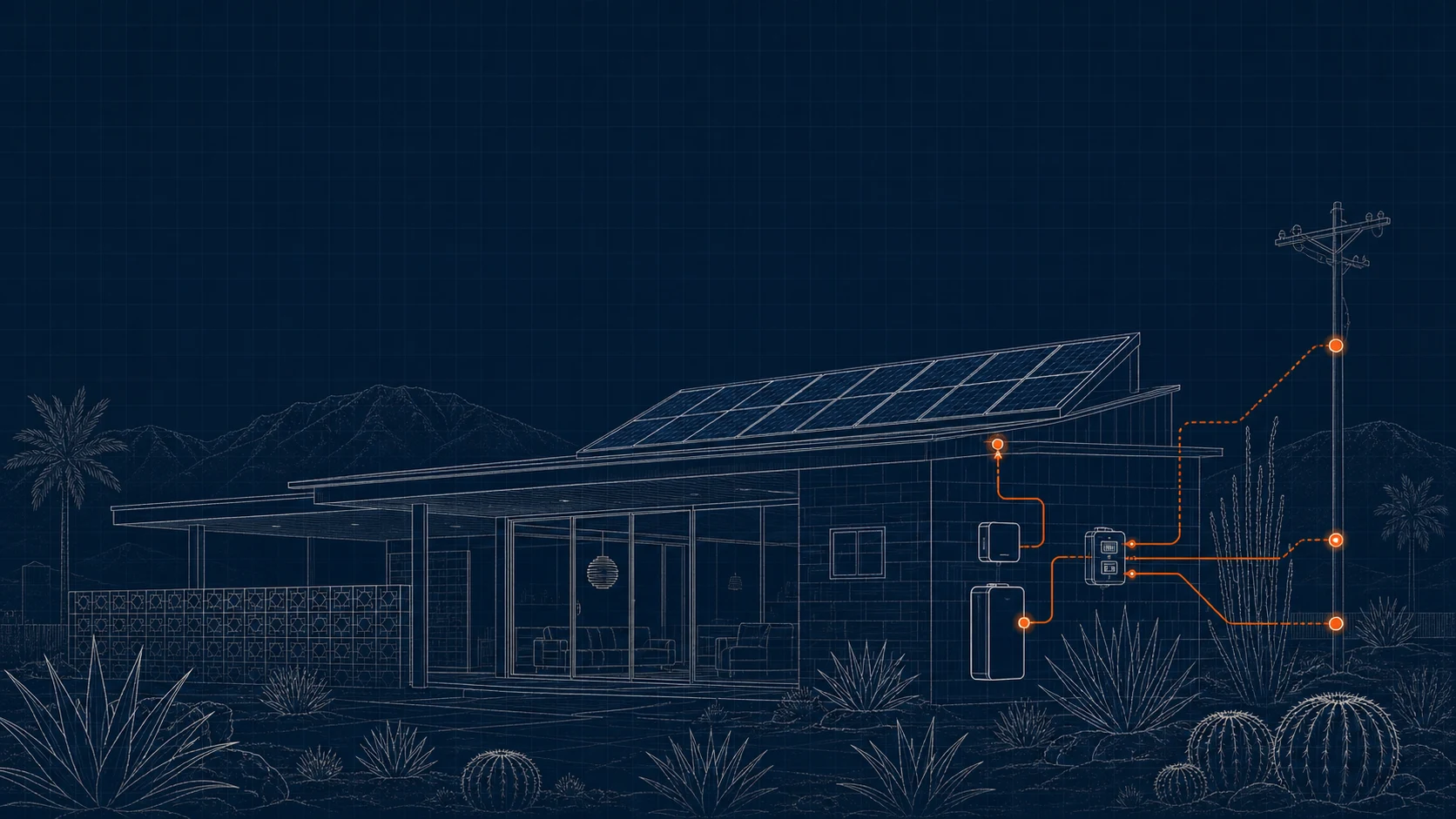
Architectural cutaway showing solar, battery storage, system control, and monitoring working together at a desert home
01

System First

Mycrogrid® begins with your home's complete energy ecosystem — not simply how many solar panels fit on the roof.

02

Control Changes Everything

Solar produces electricity. Battery storage makes it available. Intelligent control determines when, where, and how your home uses it. That's where the real value is created.

03

Built to Evolve

Every Mycrogrid® is designed to grow with your home as battery technology improves and your path toward energy independence continues.

Solar creates power

There is a hard line between generation and control: solar creates power, but batteries create control.

EV batteries accelerate the future

Global EV battery investment is driving cheaper, longer-lasting, faster-charging home storage.

Energy sovereignty

The destination is homes that produce, store, and control their own energy without leaning entirely on the utility.
Old solar model

Panels were often sold as a way to reduce the bill, but the property still sat inside a utility-connected system.

Microgrid model

The system is designed to do more locally, with storage and control built into the story from the start.

Why it matters

The choice gets clearer once you can see how independence, backup, and control actually differ.

Beyond the old solar model.

Same founder, same team, same Coachella Valley roots, now focused on microgrids. We honor existing warranties and service support while building systems designed to do more locally.

Schedule your Consultation