Energy Control Guide
Power Outages
What actually happens when the grid goes down in a desert summer — why solar alone goes dark, what a battery keeps running, and how to plan the circuits that matter.
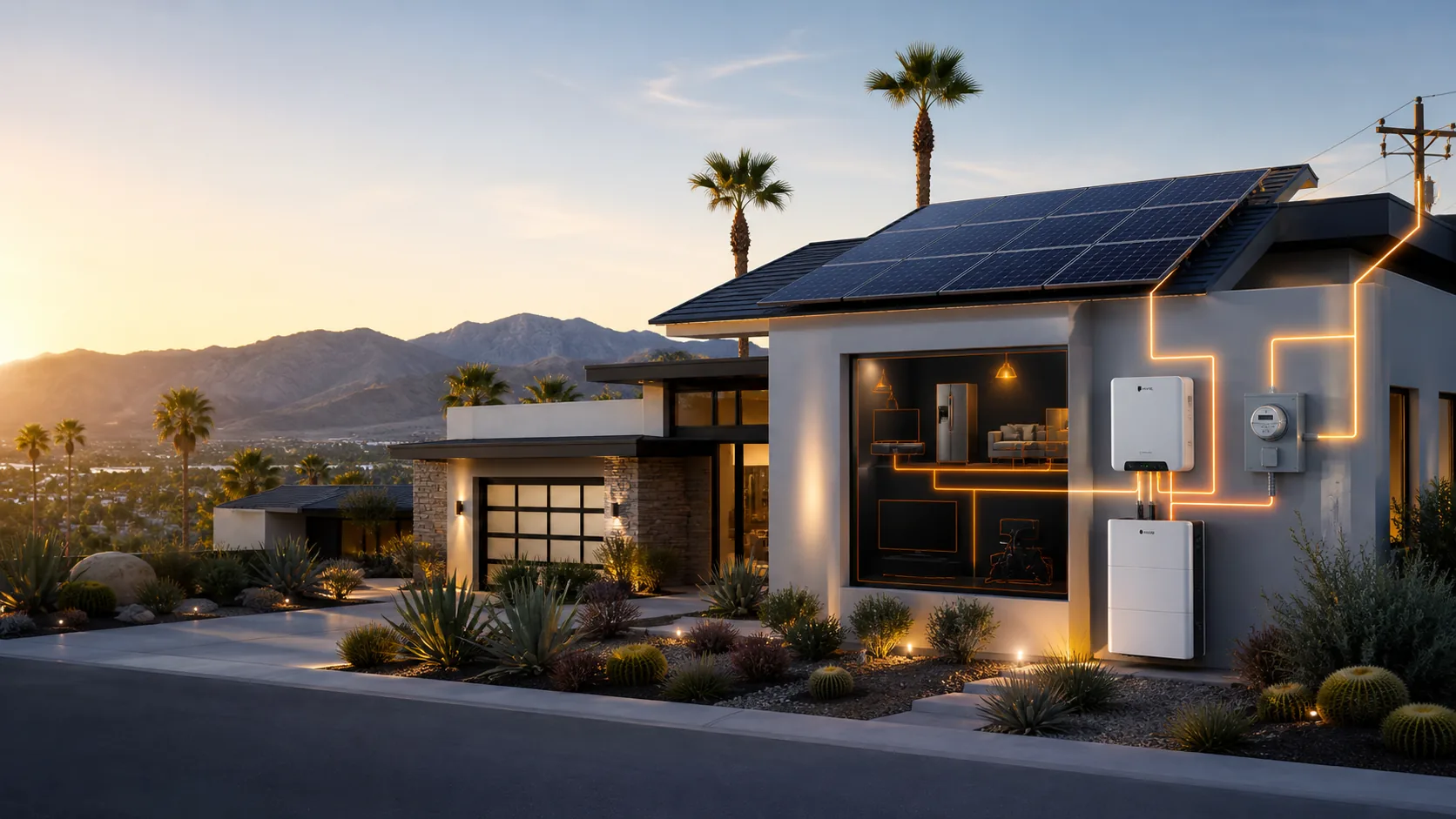
When the grid goes down in the Coachella Valley, the outage itself is rarely the emergency. The emergency is what stops running — cooling, refrigeration, medical equipment, communication — while the outside temperature keeps climbing. This guide explains what actually happens during a desert outage, why solar panels alone will not carry a home through one, and what a battery-backed system keeps running.
What a power outage means in a desert summer
In a mild climate, a power outage is an inconvenience. In the Coachella Valley in August, it is a different kind of event. Air conditioning stops first and matters most — once cooling stops, indoor temperatures in a desert home begin climbing toward the temperature outside. Refrigerators and freezers start warming within hours. Wi-Fi and cordless phones drop immediately. Electric gates and garage doors stop responding until someone finds the manual release.
For many households the stakes are higher than comfort. Refrigerated medication, oxygen concentrators, CPAP machines, and medical monitoring depend on the same circuits as everything else. When homeowners in Palm Desert, Rancho Mirage, or La Quinta plan for backup power, those loads — not the television — are usually the real reason.
Why solar panels alone go dark in an outage
This surprises many solar owners: a standard grid-tied solar system shuts itself off when the utility goes down — even in full sunlight. That is deliberate. Grid-tied inverters are required to disconnect during an outage so they cannot push power onto lines that utility crews are repairing.
The result is that panels on the roof do not equal backup power. Without battery storage and the transfer equipment that safely separates the home from the grid, a solar home sits in the same darkness as every other home on the street. This is one of the clearest differences between buying solar and building a home microgrid.
What a home battery actually keeps running
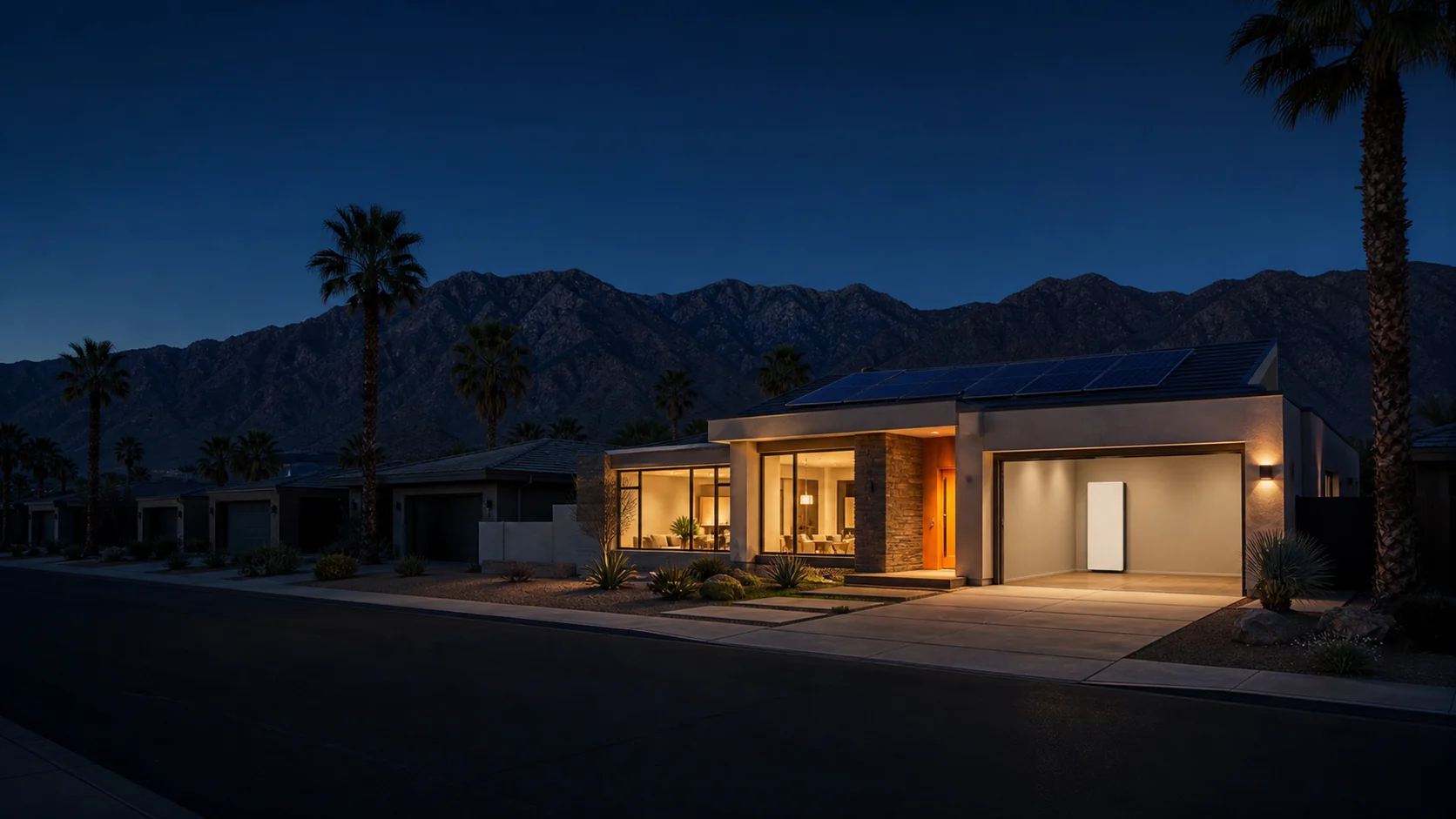
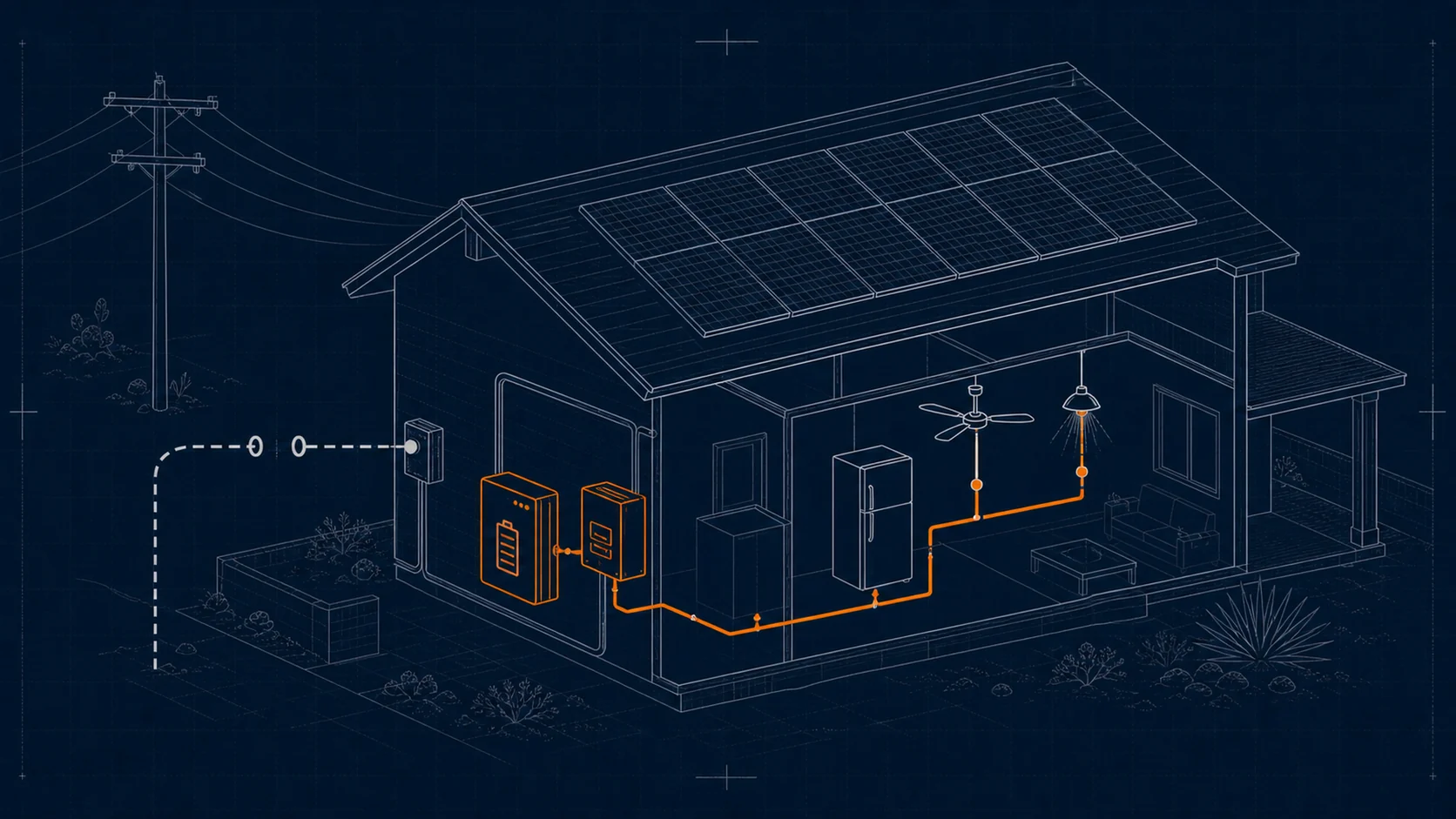
A battery-backed system is designed around backup priorities: the specific circuits that must stay live when the grid does not. During an outage, the system disconnects from the grid automatically and the battery carries those circuits — recharging from solar each day the sun comes up.
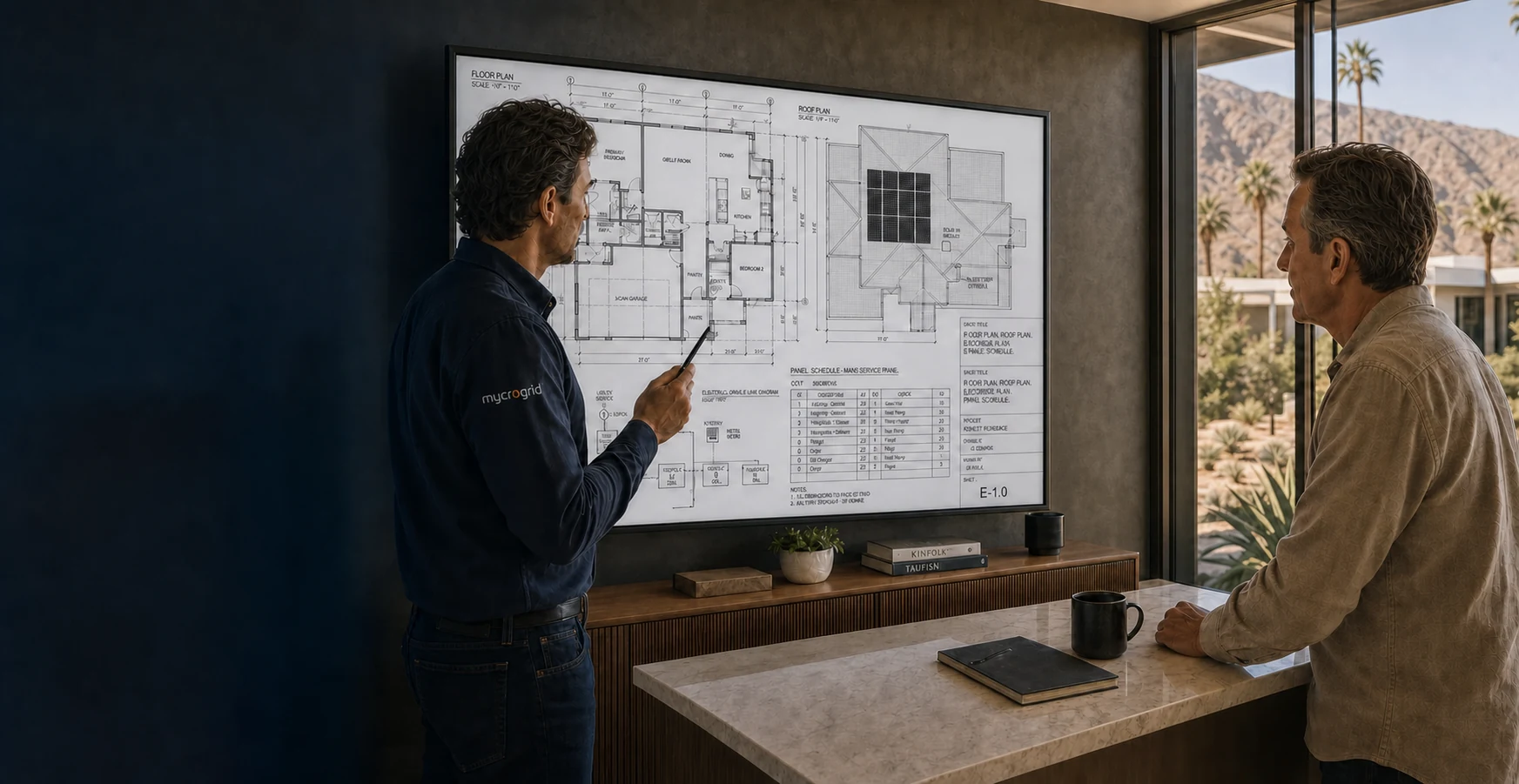
Whole-home backup, including central air conditioning, is possible — it is a question of battery capacity, inverter output, and design, not a question of whether the technology exists. That is a sizing conversation about the property and its loads, which is why it should start with a consultation rather than a quote sheet.
- Refrigeration — food and medication stay cold.
- Communication — internet, phones, and chargers keep working.
- Access and safety — garage doors, gates, and security systems keep responding.
- Selected comfort loads — fans, a mini-split, or a dedicated cool room, depending on the design.
- Medical equipment — the circuits that cannot be optional.
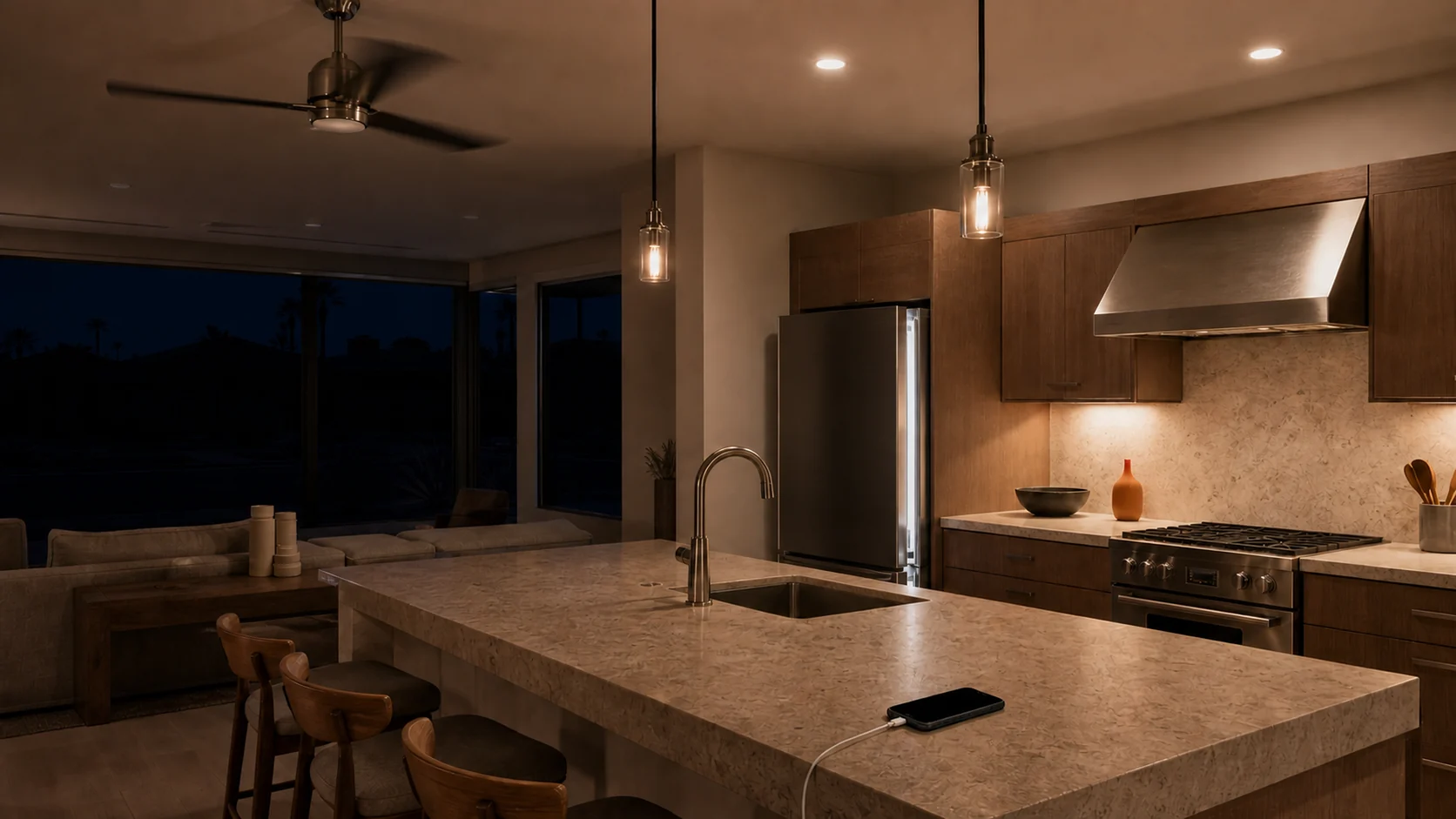
How long backup power lasts
There is no honest one-number answer; duration depends on what is running. A battery that carries essentials — refrigeration, communication, lighting, medical loads — can run through the night and recharge from solar the next morning, which is what makes multi-day outages survivable. The same battery asked to run central air conditioning will drain many times faster.
The practical approach is to decide what must run, what should run, and what can wait — then size storage to those tiers. Because the battery recharges from the sun daily, a well-designed system is not a countdown clock. It is a cycle.
Who is watching while this happens
During a grid event, the last thing a homeowner should be doing is standing in the garage interpreting inverter lights. Mycroguard™ is the monitoring layer around a Mycrogrid® system: it watches production, storage, and system behavior, and flags what needs service — during outages, and during the ordinary months when nobody is thinking about the equipment.
That is what changes backup power from equipment in the garage into something closer to mission control for the home: the homeowner sees status, and someone is responsible for the system.
Common questions
- Will my solar panels work during a power outage?
- Not by themselves. Standard grid-tied solar systems are required to shut down when the utility goes down, even in full sun. Keeping power on during an outage requires battery storage with transfer equipment that safely separates the home from the grid.
- How long can a home battery keep my house running?
- It depends on what is running. Essentials like refrigeration, communication, and medical equipment can typically be carried through the night, and the battery recharges from solar the next day — which is what makes longer outages manageable. Running central air conditioning draws the battery down much faster and is a system-sizing decision.
- Do I need a generator if I have a battery?
- Not always. Many homes are well served by solar plus storage because the battery recharges daily. A generator can add capacity for longer events or heavier loads and can be integrated into a home microgrid — but it should be a design decision based on the home's backup priorities, not a default.